OBJECTIVES

1. Awareness of feelings, sensations, needs, frames of reference (geo)political and historical events.

2. Connecting from empathy/compassion.

3. Considering of and openness to multiple perspectives.

4. Considering needs underlying behaviours.

5. Focusing on the positive intent underlying behaviour (personal and/or cultural).

6. Focusing on needs as a way (back) to connection when challenged/triggered by a specific situation/behaviour.
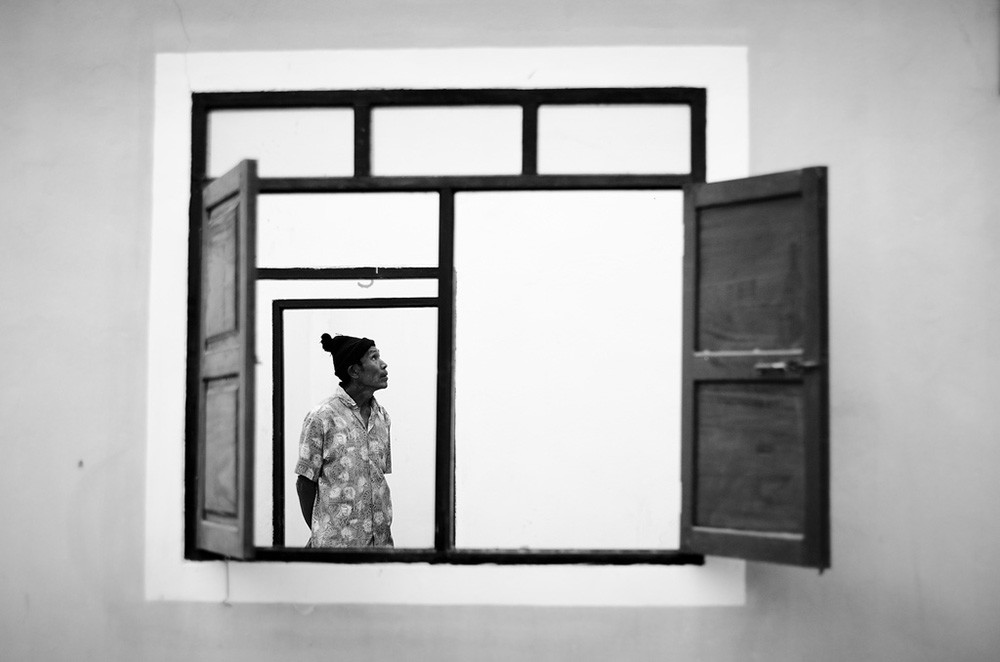
7. Curiosity about one’s own and other’s experiences (empathy enhancement).
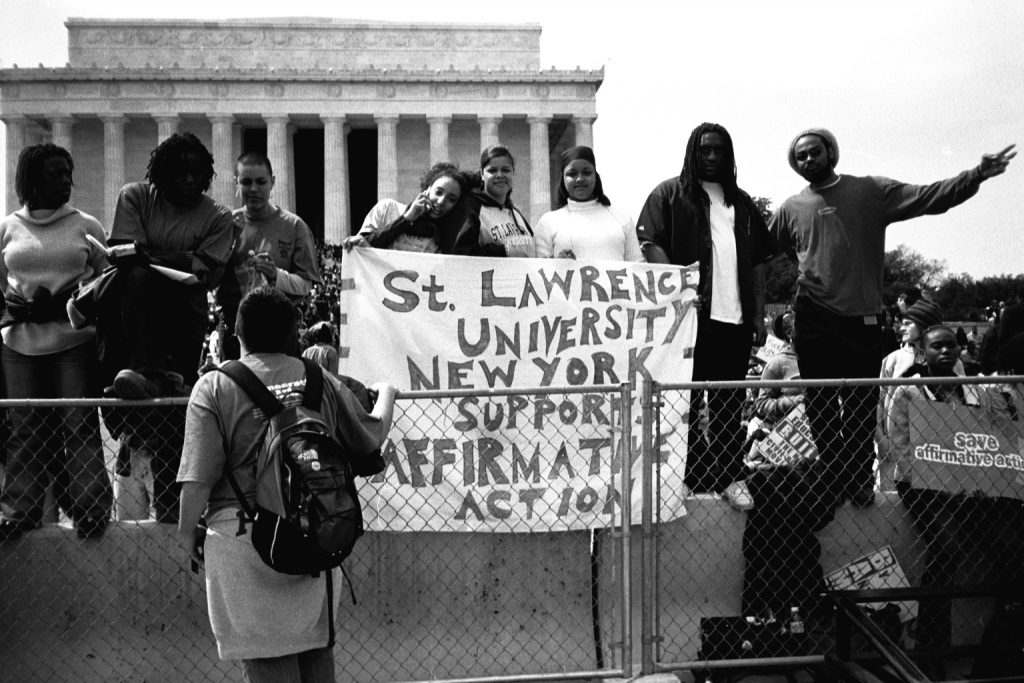
8. Inviting in the (wisdom of the) minority voice.

9. Increasing confidence in one’s ability to self-regulate, co-regulate and navigate conflict and challenging dynamics in educational contexts, as well as in inter-and intrapersonal relationships (empowerment, resilience).

10. Awareness of universal needs and discussing/negotiating strategies (personal, cultural) to meet everyone’s needs (intercultural dialogue).

11. A willingness to re-think and co-create meaningful events and alternative meanings (curiosity, generosity, empowerment).
CONTENT
 Cross-cultural communication (click on the image to dowland the file)
 Critical incident analysis
 Audiovisual content (click on the image to watch the video)
Nonviolent communication with Marshall Rosenberg

REFERENCES
Agerbeck, B., Bird, K., Bradd, S., & Shepherd, J. (2016). Drawn together through visual practice: An anthology. Visual Practice Press.
Arise Embodiment. (n.d.). So you’re ready to choose love: Free conflict resolution workbook. https://ariseembodiment.org/free-workbook/
Bennett, M. (2013). [Entry on intercultural sensitivity]. In C. Cortés (Ed.), Multicultural America: A multimedia encyclopedia. Sage.
Bloem, R., Cuypers, L., & Orye, A. (2023). International and transcultural IT-toolkit: Developed lesson material for the course “The Internationalist”.
Bookey. (n.d.). Embracing diversity in decolonizing nonviolent communication for social justice. Retrieved April 11, 2024, from https://www.bookey.app/topic/embracing-diversity-in-decolonizing-nonviolent-communication-for-social-justice
Chahine, I. (2013). Towards an engaged pedagogy: Bell hooks manifesto and the teaching and learning of mathematics. Global Journal of Human-Social Science, 13(G10), 23–26.
Cimic. (2015). Interculturele competentie in het onderwijs. Politeia.
De Leersnyder, J., Gündemir, S., & Ağirdağ, O. (2021). Diversity approaches matter in international classrooms: How a multicultural approach buffers against cultural misunderstandings and encourages inclusion and psychological safety. Studies in Higher Education, 1–18.
Fantini, A. E. (2000). A central concern: Developing intercultural competence. SIT Occasional Paper Series, 1, 25–42.
Gowing, A. (2019). Peer-peer relationships: A key factor in enhancing school connectedness and belonging. Educational and Child Psychology, 36(2), 64–77. https://doi.org/10.53841/bpsecp.2019.36.2.64
Hammond, Z. (2014). Culturally responsive teaching and the brain: Promoting authentic engagement and rigor among culturally and linguistically diverse students. Corwin Press.
hooks, b. (1995). Teaching to transgress: Education as the practice of freedom. Routledge.
II, D. K. S. (2023, May 16). Decolonizing nonviolent communication: A path towards inclusive dialogues. Medium.
Kohlrieser, G. (n.d.). Embrace conflict – Put the fish on the table. LinkedIn. https://www.linkedin.com/pulse/embrace-conflict-put-fish-table-george-kohlrieser/
Let It Shine Counseling. (n.d.). Felt sense. Retrieved April 11, 2024, from https://letitshinecounseling.com/felt-sense/
Meenadchi. (2021). Decolonizing non-violent communication (DNVC).
Neurodiversity Education Academy. (n.d.). How are you feeling? What do you need? Retrieved July 4, 2024, from https://www.linkedin.com/pulse/how-you-feeling-what-do-need-neurodiversity-education-academy/
Nguyen, T. L. (2019, July 1). A brief analysis of Freire’s dialogue term. Medium. https://medium.com/age-of-awareness/a-brief-analysis-of-freires-dialogue-term-81cb12fd9d71
Psychology Today. (n.d.). Belonging, learning, and the brain. https://www.psychologytoday.com/us/blog/belonging-matters/202306/belonging-and-learning-and-the-brain
PuddleDancer Press. (2023, October 30). NVC trauma. https://www.nonviolentcommunication.com/learn-nonviolent-communication/nvc-trauma/
PuddleDancer Press. (n.d.). Marshall Rosenberg NVC quotes.
Roberts, P. (2023). Paulo Freire on democratic education (D. Yacek, J. Drerup, & J. Culp, Eds.). Cambridge University Press.
Sadowski, E. (2018). Intuition and education. Oxford Research Encyclopedia of Education. https://doi.org/10.1093/acrefore/9780190264093.013.306
Shapiro, H. (2018, April 23). The Wiley handbook on violence in education [Review]. John Wiley & Sons.
Torres, F. (2018, February 12). Pedagogy of love: Teaching for humanity. Online Network of Educators. https://onlinenetworkofeducators.org/2018/02/12/pedagogy-of-love/
United Nations. (2023, September 22). Discourse on peace at United Nations | Gurudev Sri Sri Ravi Shankar.
United Nations. (n.d.). Intercultural dialogue. https://www.un.org/en/academic-impact/inter-cultural-dialogue
University of California, Santa Cruz. (n.d.). Tool: Interrupting microaggressions. https://academicaffairs.ucsc.edu/events/documents/Microaggressions_InterruptHO_2014_11_182v5.pdf
Empathy by Marshall

«If I use empathy to liberate people to being less depressed,
— Marshall Rosenberg
to help them get along better with their family, and at the same time not inspire them to use their energy to rapidly transform systems in the world, then I am part of the problem.
I am essentially calming people down, making them happier to live in the systems as they are,
Then I am using empathy as a narcotic.»
For discussion
- How can Cross-cultural communication (CCC) practices foster inclusion and resolve conflicts between students from different cultural backgrounds?
- ¿Qué desafíos pueden surgir al implementar los componentes del CCC (observación, sentimientos, necesidades y peticiones) en el aula? ¿Cómo podría superarlos?
- In the context of deep democracy, how can we ensure that students’ voices from historically marginalized communities are heard and respected within the classroom?
86 Comments
Comments are closed.