OBJECTIVES
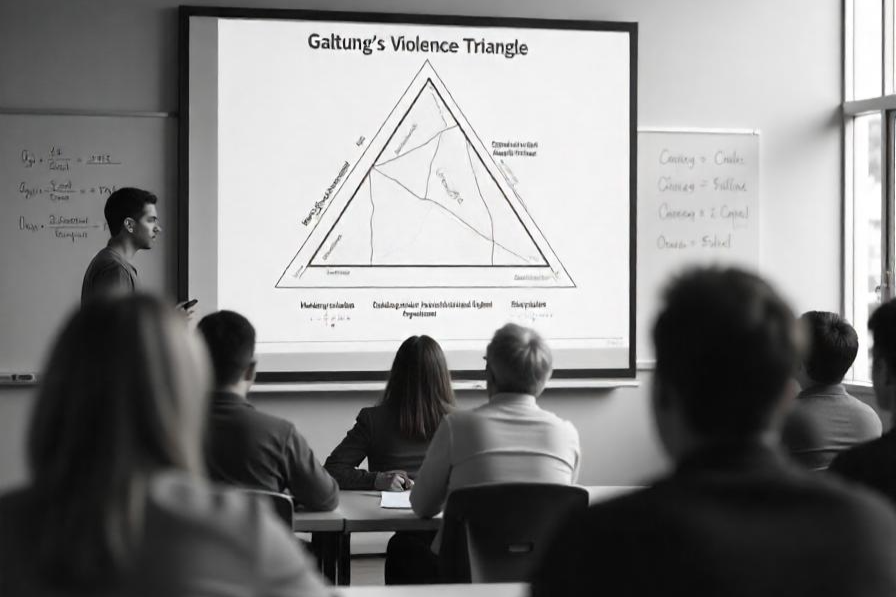
1. Insight into Galtung’s Triangle of Violence and its implications for education.
2. Understanding Galtung’s concepts of positive and negative peace.

3. Reflecting on a constructive way forward: an engaged pedagogy (Bell Hooks).
4. Exploring intersectionality and assumptions about privilege and social status (Pyramid of Privilege, Mounir Samuel), and their implications for education.
CONTENT
 Galtung and the pyramid of privilege (click on the image to dowland the file)
 Defining the concept of positive and negative peace
 Audiovisual content (click on the image to watch the video)
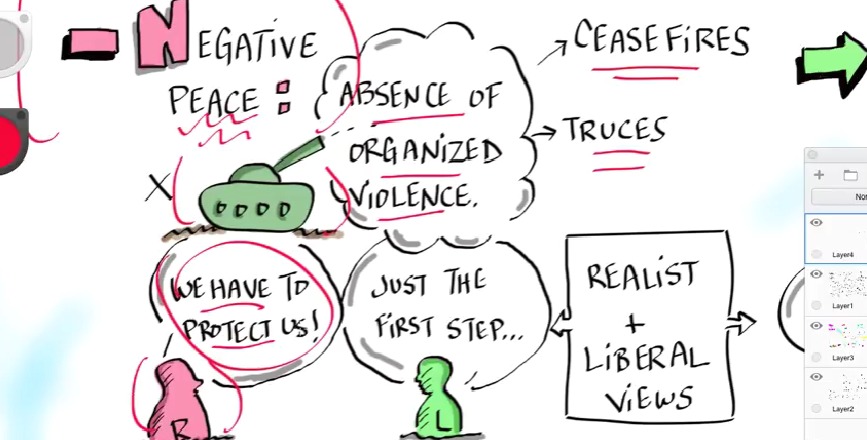
Negative and positive peace
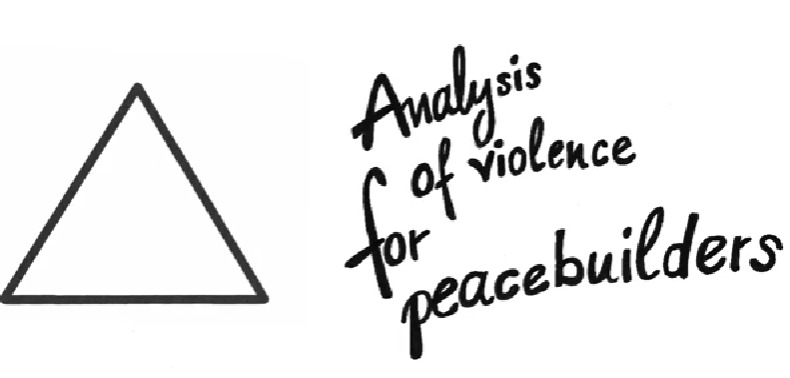
To understand violence in all its forms
REFERENCES
Bell hooks. (2017, June 30). About bell hooks. https://bellhooksbooks.com/bell-hooks/
Chahine, I. (2013). Towards an engaged pedagogy: Bell hooks manifesto and the teaching and learning of mathematics. Global Journal of Human-Social Science, 13(G10), 23–26. https://socialscienceresearch.org/index.php/GJHSS/article/view/700/3-Towards-an-engaged-Pedagogy-Bell_html
Co, J. (2023, July 30). An easy guide for social justice: Talking about power & privilege. Joeydolls. https://joeydolls.com/easy-guide-social-justice-talking-about-power-privilege/
Cremin, H., & Guilherme, A. A. (2015). Violence in schools: Perspectives (and hope) from Galtung and Buber. Educational Philosophy and Theory, 48(11), 1123–1137. https://doi.org/10.1080/00131857.2015.1102038
Facing History & Ourselves. (2020, September 24). Cultivating critical consciousness in the classroom. https://www.facinghistory.org/ideas-week/cultivating-critical-consciousness-classroom
Facing Human Wrongs. (n.d.). Schooling the world (documentary). Retrieved April 10, 2024, from https://blogs.ubc.ca/facinghumanwrongs/schoolingtheworld/
Galtung, J. (1964). Editorial. Journal of Peace Research, 1(1), 1–4.
Galtung, J. (1969). Violence, peace, and peace research. Journal of Peace Research, 6(3), 167–191.
Perez, D. (2023, June 30). Chapter 3: The foundations of education in the United States. Pressbooks. https://kstatelibraries.pressbooks.pub/edci710/chapter/chapter-two/
Samuel, M. (n.d.). De privilege piramide. https://www.mounirsamuel.nl/werkzaamheid/de-privilege-piramide/
Schooling the world. (2010). Films for Action. https://www.filmsforaction.org/watch/schooling-the-world-2010/
Smith, K. (2023, August 25). Cultivating critical consciousness in the classroom. Facing History & Ourselves. https://www.facinghistory.org/ideas-week/cultivating-critical-consciousness-classroom
Specia, A., & Osman, A. (2015). Education as a practice of freedom: Reflections on bell hooks. International Journal of Education and Research, 3(6), 195–206. https://files.eric.ed.gov/fulltext/EJ1079754.pdf
The Jyot Curriculum. (2021). Pyramid of power. Sikh Coalition. https://www.sikhcoalition.org/wp-content/uploads/2018/08/Jyot-Pyramid-of-Power.pdf
TRANSCEND Media Service. (n.d.). Varieties of violence: Structural, cultural, and direct. https://www.transcend.org/tms/2020/01/varieties-of-violence-structural-cultural-and-direct-2/
All about love
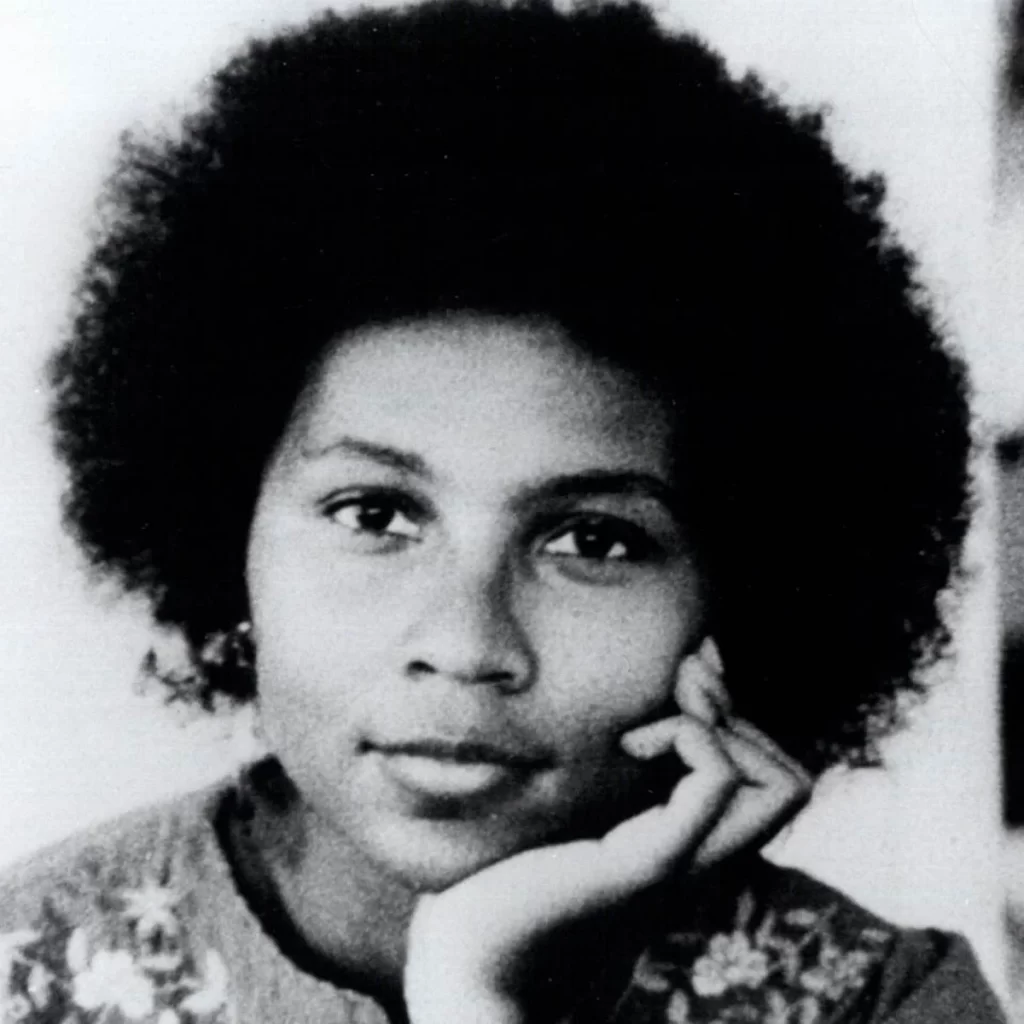
«Cuando podemos vernos y aceptarnos como realmente somos, construimos las bases para el amor propio. Aprender a amarnos a nosotros mismos y a los demás depende de la presencia de un entorno amoroso. El amor propio no puede florecer de forma aislada.»
— Bell Hooks
Para debatir
- How does cultural violence manifest in educational exclusion?
- ¿Qué estrategias se podrían implementar para construir una paz positiva en diversos entornos educativos?
- ¿Cómo podemos aplicar los principios de paz positiva en un aula culturalmente diversa, garantizando que no sólo se aborden los conflictos visibles, sino también las estructuras y normas que perpetúan la violencia?
111 Comments
Andrea Basantes-Andrade · 2026-01-30 at 11:02 am
Building positive peace in educational settings goes beyond simply avoiding conflict; it involves actively promoting inclusion, equity, and well-being within the learning community. From a teaching perspective, this can be fostered by creating spaces for respectful dialogue, encouraging collaborative work, integrating intercultural perspectives into the curriculum, and establishing classroom norms together with students. It is also important to model peaceful communication and to promote critical thinking about stereotypes and biases. Ultimately, positive peace is built day by day through educational practices that value diversity, justice, and mutual respect.
Marlen Congo-Cervantes · 2026-02-11 at 10:57 am
Dear Andrea, your comment clearly highlights that positive peace in education is not a passive state but an active and continuous process. The emphasis on inclusion, equity, and well-being shows a comprehensive understanding of peace as something that must be intentionally cultivated in the classroom. I agree with the importance of respectful dialogue and collaborative work, as these practices help students learn to listen to others and value diverse perspectives.
Cathy Guevara-Vega · 2026-02-12 at 7:44 am
Dear Marlen, I agree with her comment. Currently, the social problems, such as the violence, are more frequent in the classroom. The emphasis on inclusion is a positive strategy that helps students to maintain peace between them. Listening and having good communication with the people can be positive for life in harmony and being happy without getting away from the problems.
Gabriela Bastidas-Amador · 2026-02-11 at 10:46 am
Building positive peace in schools is not just about avoiding conflict; it is about creating a learning environment where everyone feels respected, included, and valued. This can be achieved by encouraging open and honest dialogue, promoting teamwork, and integrating different cultural perspectives into everyday lessons. Teachers play an important role by modeling respectful communication, guiding students to reflect on stereotypes and biases, and establishing classroom agreements together with their students. When daily interactions are based on empathy, fairness, and mutual understanding, positive peace becomes a natural and lasting part of the educational experience.
Carlos · 2026-02-11 at 12:24 pm
Dear, Ms Gabriela. Your reflection clearly emphasizes that positive peace goes beyond simply preventing problems and focuses on actively building a supportive and inclusive school culture. It highlights practical strategies, such as dialogue, teamwork, and cultural awareness that can realistically be applied in everyday classroom practice.
Jessica Anrango · 2026-02-11 at 12:29 pm
Dear Gabriela, your point of view effectively underlines the key role of teachers as role models and facilitators of respectful interaction. By connecting empathy, fairness, and collaboration to long-term educational success, it presents positive peace as a continuous process rather than a one-time objective.
Carolina · 2026-02-12 at 10:28 am
I agree that positive peace is more than avoiding conflict; it means creating a space where no one feels excluded. I have often felt excluded in my life, and sometimes I even blame myself, but at university I have also experienced how supportive friendships can change everything.
I believe dynamic activities to get to know each other are essential for inclusion. As a future language teacher, I want to build a classroom where every student feels valued, respected, and truly heard.
Santiago Noboa · 2026-02-12 at 10:34 am
Dear Teacher, it captures the heart of positive peace by showing it’s not just about stopping conflict, but about intentionally creating a classroom where every student feels seen, heard, and valued. You highlight practical, doable actions—open dialogue, teamwork, cultural perspectives, and co-creating classroom agreements—that any teacher can start using tomorrow. What I appreciate most is your emphasis on daily interactions; you remind us that peace isn’t built through grand gestures, but through consistent, small moments of empathy and fairness. Your comment turns theory into practice, and that’s exactly what Galtung, Freire, and Hooks call us to do.
Jean Barahona · 2026-02-12 at 10:49 am
Promoting positive peace in schools is more than simply preventing conflict; it requires building an environment where fairness, inclusion, and emotional well-being are priorities. From an educational point of view, this can be achieved by encouraging respectful conversations, collaborative learning, and the inclusion of diverse cultural viewpoints in daily activities. Teachers have a key responsibility in this process, as they set the example through peaceful communication and help students question stereotypes and prejudices. Creating classroom rules together also strengthens students’ sense of responsibility and belonging. Over time, when empathy, respect, and justice guide everyday interactions, positive peace becomes embedded in the school culture. Rather than being a one-time effort, it is a continuous practice that shapes how students relate to others and prepares them to contribute to a more peaceful and inclusive society.
Jhuly Melisa Ipiales · 2026-02-16 at 2:05 pm
Jean, I share your point of view that building positive peace requires constant commitment from everyone in the educational community. I also believe that collaborative work and dialogue are key to consolidating an inclusive and respectful school culture.
Doris Quilca · 2026-02-18 at 7:29 pm
Jean, I really appreciate your emphasis on positive peace as a continuous practice rather than a one-time effort. I agree that embedding empathy, justice, and inclusion into everyday classroom interactions is essential for building a truly peaceful school culture. I also find your point about teachers setting the example through peaceful communication especially important, since students often learn more from what we model than from what we explicitly teach. Your reflection clearly highlights how education can shape not only academic development but also social responsibility.
Giovanna Jailyn Galindo Gonzaga · 2026-02-18 at 7:33 pm
I completely agree with you, Teacher Gaby, that building positive peace in schools is much more than simply preventing conflict. In my opinion, true peace in education happens when respect, inclusion, and empathy are intentionally practised every day. It is about creating a classroom culture where students feel safe to express themselves and where diversity is genuinely valued.
From my experience, when teachers model respectful communication and involve students in creating classroom agreements, the atmosphere changes positively. Students become more responsible and supportive of one another. I have also seen that encouraging open conversations about stereotypes helps learners develop critical thinking and empathy. I truly believe that positive peace is built through consistent, caring actions that strengthen trust and mutual understanding in the classroom.
Salas Guancha Jeamy Mabel · 2026-02-18 at 9:48 pm
Mrs. Bastidas,
I agree with your idea that positive peace in schools goes beyond of just simply avoiding conflicts. I especially liked how you mentioned inclusion and respect as essential elements. I think sometimes schools focus too much on discipline and rules, but not enough on building genuine understanding among students.
I also believe that modeling respectful communication, as you said, is key since students learn a lot from teachers, not only from what they teach directly. I would like to add that promoting positive peace also requires addressing deeper issues like inequality or exclusion that may exist within the school system. It is not only about classroom interactions, but also about creating fair participation opportunities for all students.
Overall, your comment highlights very important practical actions that can truly make peace something real and daily in schools and not just a theoretical concept.
Jaime Portilla-Chagna · 2026-02-11 at 11:52 am
It is important to recognize that education is the best tool to change the world, focusing on an environment where violence is eradicated and peace is promoted and practiced above all else, in a world without educational borders and with an eye always on the goal of universal development.
Marcelo Mina · 2026-02-11 at 12:04 pm
Creo sinceramente que hablar de paz positiva en la escuela es hablar de algo mucho más profundo que simplemente evitar peleas o conflictos. Se trata de construir, día a día, un ambiente donde cada estudiante se sienta mirado, escuchado y valorado por quien es. Cuando reconocemos la diversidad como una fortaleza y no como un problema, el aula deja de ser solo un espacio para aprender materias y se convierte en un lugar donde también se aprende a ser mejores personas. En el fondo, la paz positiva se fortalece cuando la empatía, la justicia y el respeto forman parte de lo cotidiano. Así, la escuela no solo educa en conocimientos, sino también en humanidad.
Fausto Tapia G. · 2026-02-11 at 12:20 pm
La violencia cultural en la educación, hoy en dia es el mayor problema que la sociedad tiene, la normalizacion del mal trato, esta permitiendo cada vez que esto parezaca algo natural….trabajar en un ambiente libre de esta violencia, cambiar la mentalidad de las personas es sin duda un desafio que la eduaccion tiene y que no es facil de lograr.
Discursos como “no le da la cabeza”, o “quien quiere, puede”, por ejemplo son mecanismos de exclusion que auque no parezcan graves, tiene muchas veces repercusiones profiundas en las personas, este tipo de dificultades son las que se enfrentan dia dia peronas que muchas veces quedan fuera del sistema de eduaccion superior.
Otro problema esta en clasificar a los alumnos bajo términos como “conflictivo”, “lento” o “malo”. Etiquetas culturales que permiten a la institución y docentes invertir menos en ellos, facilitando su eventual saliuda y fracaso.
Sin duda un tema amplio para debatir y conversar pero sobre todo para pober conciencia en cada uno esperando lograr corregir la violencia cultural en el ámbito educativo, no con cambios superficiales; sino con transformación profunda de las creencias y las prácticas institucionales.
Nicole Caicedo · 2026-02-11 at 12:25 pm
Querido Fausto, su reflexión aborda con mucha claridad uno de los problemas estructurales más profundos del sistema educativo: la violencia cultural como mecanismo de exclusión normalizado. Coincido plenamente en que este tipo de violencia es especialmente peligrosa porque se manifiesta de manera sutil, a través del lenguaje, las expectativas y las prácticas cotidianas, lo que contribuye a su legitimación social. Expresiones aparentemente inofensivas como “no le da la cabeza” o “quien quiere, puede” reproducen una lógica meritocrática que invisibiliza las desigualdades sociales, económicas y culturales que atraviesan las trayectorias educativas de los estudiantes. Asimismo, la etiquetación de los alumnos mediante categorías como “conflictivo”, “lento” o “malo” no solo condiciona las prácticas pedagógicas, sino que también refuerza procesos de segregación y abandono escolar, trasladando la responsabilidad del fracaso al individuo y eximiendo a la institución de una autocrítica profunda. En este sentido, erradicar la violencia cultural en la educación exige más que cambios discursivos; implica una transformación estructural de las creencias, las prácticas docentes y las políticas institucionales, orientadas hacia una educación verdaderamente inclusiva, equitativa y centrada en la dignidad de cada estudiante.
Fabricio Huera · 2026-02-11 at 12:38 pm
Estimada Nicol , el análisis que presentas resulta especialmente pertinente porque pone en evidencia cómo la violencia cultural opera de manera silenciosa dentro del sistema educativo, naturalizando prácticas de exclusión que muchas veces pasan desapercibidas. Destaco tu énfasis en el lenguaje como una herramienta poderosa de reproducción de desigualdades, ya que las etiquetas y discursos que mencionas no solo afectan la autoestima y el desempeño de los estudiantes, sino que también condicionan las decisiones pedagógicas e institucionales. Además, tu reflexión invita a comprender que el fracaso escolar no es un fenómeno individual, sino el resultado de estructuras educativas que no siempre responden a la diversidad de contextos y necesidades del alumnado. En este sentido, tu comentario aporta una mirada crítica necesaria y refuerza la urgencia de promover procesos de transformación profunda en la educación, orientados a la equidad, la inclusión y la justicia social.
Vanessa Figueroa · 2026-02-11 at 12:23 pm
La violencia cultural en la educación se manifiesta cuando ciertos estudiantes son excluidos o invisibilizados por su cultura, género, idioma o condición social. Esto ocurre cuando el currículo, las normas o las actitudes reproducen estereotipos y desigualdades.
Para construir una paz positiva en la escuela, no solo debemos evitar conflictos, sino cambiar las estructuras que generan discriminación. Es importante usar materiales inclusivos, promover el respeto, el diálogo y dar voz a todos los estudiantes.
Jordy Salas · 2026-02-11 at 12:28 pm
Vanessa, your reflection powerfully captures how cultural violence operates beneath the surface of education. I especially value how you connect exclusion not only to individual attitudes but to curriculum and institutional norms — because that’s where inequality often becomes normalized. Your idea of building positive peace by transforming structures, not just preventing conflict, is key: inclusion is not passive tolerance, it is intentional redesign. When we diversify materials, validate students’ identities, and create spaces for dialogue, we are not simply being “kind”; we are challenging the roots of discrimination. True peace in schools begins when every student is not only present, but genuinely seen, heard, and valued.
Jéssica Hernández · 2026-02-11 at 10:41 pm
Estimada Vanessa, coincido plenamente con tu reflexión. La violencia cultural constituye una forma de exclusión escolar que tiende a naturalizar y reproducir desigualdades sociales dentro del ámbito educativo. Considero fundamental promover el respeto y el reconocimiento de la diversidad cultural no solo en las instituciones educativas, sino también a nivel social y ciudadano. En este sentido, como bien señalas, la construcción de una paz positiva en la escuela resulta clave para fortalecer la equidad, el sentido de pertenencia y la justicia. Esto implica incorporar una perspectiva intercultural en el currículo y en las prácticas pedagógicas, así como generar espacios de diálogo donde todos puedan ser escuchados y valorados como parte esencial de la identidad y la cultura de cada estudiante.
Daniela · 2026-02-11 at 12:26 pm
In my opinion, the issue of violence and peace in the educational field is of great importance because all of us who are part of an educational institution want our surroundings to be filled with peace and not violence. This is why we must focus on building and improving an environment capable of demonstrating the trust and security that students and all members of the community will be heard at any time or in any situation where they need help.
Pablo Landeta-López · 2026-02-11 at 12:27 pm
To build positive peace in higher education, universities should implement inclusive curricula, equitable admission and evaluation policies, intercultural dialogue initiatives, mentorship programs, and participatory governance that amplifies diverse voices. Applying the principles of positive peace in culturally diverse classrooms requires not only addressing visible conflicts, but also critically transforming power structures, academic hierarchies, and implicit norms to foster equity, belonging, and epistemic justice for all students.
Tamya De la Torre · 2026-02-11 at 12:30 pm
Implementar la paz positiva en un salón culturalmente diverso implica revisar a fondo tanto las interacciones cotidianas como las bases estructurales que pueden generar inequidad. No se trata únicamente de mediar disputas cuando aparecen, sino de cuestionar de forma consciente aquellas reglas no escritas, recursos pedagógicos y rutinas que, aunque parezcan neutras, pueden perpetuar exclusiones. Por ello, es esencial diversificar los contenidos académicos, integrando voces, experiencias y saberes de distintos grupos culturales para que cada estudiante se sienta reconocido.
Del mismo modo, utilizar estrategias de aprendizaje cooperativo favorece la participación equilibrada y el respeto por las diferencias. Además, establecer normas de convivencia mediante procesos participativos fortalece el compromiso colectivo. También resulta clave propiciar conversaciones abiertas sobre discriminación, estereotipos y privilegios, con el fin de identificar desigualdades normalizadas. Así, el aula se consolida como un espacio formativo donde prevalecen la equidad, el diálogo y la inclusión auténtica.
Anabela Galárraga · 2026-02-11 at 12:30 pm
Para construir una cultura de paz positiva en diversos entornos educativos es clave combinar estrategias que fortalezcan el bienestar, la equidad y la convivencia, más allá de evitar conflictos, integrando aprendizaje socioemocional (empatía, autorregulación y habilidades de diálogo), prácticas restaurativas (mediación y reparación del daño), y acciones de inclusión e interculturalidad que reduzcan discriminación y favorezcan la participación estudiantil significativa. En consecuencia, estas medidas requieren formación docente y un clima escolar seguro y colaborativo para sostener una cultura de paz en el tiempo.
Carla Romo · 2026-02-11 at 12:34 pm
I agree that creating a peaceful educational environment is essential, since students can only learn meaningfully when they feel safe, respected, and listened to. However, I believe that promoting peace in schools should go beyond the absence of visible violence or the feeling of security. It also requires questioning the hidden forms of exclusion that may exist in rules, language, or expectations that do not consider students’ diverse realities. From my perspective, true peace in education is built when institutions actively promote equity, participation, and dialogue, ensuring that every voice is not only heard in moments of difficulty but also valued in everyday learning. In this way, education becomes a space where justice and inclusion are practiced continuously, not only desired.
Herrera-Herrera Paula · 2026-02-11 at 12:35 pm
It is important to be aware of the violence that can exist in educational environments, not only the kind that is easily noticed, but also the hidden forms that can harm students more deeply. Understanding this helps us recognize existing problems and possible solutions. For this reason, it is essential to reflect on our own privileges and recognize that not everyone has the same opportunities, which can negatively affect others.
Patricio Granda · 2026-02-11 at 12:35 pm
Fostering positive peace in schools is not limited to the absence of disagreements; rather, it requires intentional actions that strengthen inclusion, fairness, and the overall well-being of the educational community. From the educator’s role, this can be achieved by promoting open and respectful conversations, supporting cooperative learning experiences, incorporating diverse cultural viewpoints into lessons, and co-constructing classroom rules with students. Additionally, teachers should demonstrate constructive communication and guide learners to reflect critically on prejudices and assumptions. In essence, positive peace develops progressively through daily pedagogical practices that uphold diversity, equity, and reciprocal respect.
Jhoel Sarmiento · 2026-02-11 at 12:40 pm
Construir una paz positiva en los entornos educativos implica asumir que la convivencia no se logra únicamente evitando conflictos, sino promoviendo activamente relaciones basadas en el respeto, la equidad y la empatía. Esto requiere que el aula se convierta en un espacio seguro donde cada estudiante pueda expresar su identidad sin temor a ser juzgado o excluido. El profesorado cumple un papel esencial al fomentar el diálogo intercultural, promover el pensamiento crítico frente a estereotipos y generar dinámicas participativas que fortalezcan el sentido de comunidad. Cuando la diversidad se reconoce como una oportunidad de aprendizaje y crecimiento colectivo, la paz positiva deja de ser un concepto teórico y se convierte en una práctica cotidiana que transforma la experiencia educativa.
Susana Reinoso · 2026-02-11 at 12:42 pm
Creating peaceful educational environments is essential to prevent situations of violence and promote positive learning experiences. When students feel respected and safe, they are more willing to participate and develop their abilities. In contrast, violence and discrimination can create fear, exclusion, and low academic performance. For this reason, schools must strengthen values such as empathy, tolerance, and respect to encourage harmonious coexistence and responsible citizenship.
Antonio Quiña · 2026-02-11 at 12:46 pm
Cultural violence manifests in educational exclusion when stereotypes, prejudices, and institutional norms silently marginalize certain groups. This can be seen in biased curricula, discriminatory language, unequal expectations, and evaluation systems that favor dominant cultural perspectives. In contrast, positive peace is not only the absence of visible conflict, but the presence of justice, inclusion, and equal opportunities. Building positive peace in diverse educational environments requires intercultural dialogue, inclusive teaching practices, restorative approaches to conflict, student participation, and continuous teacher training. By addressing both visible tensions and underlying structural inequalities, classrooms can become spaces that promote respect, equity, and sustainable coexistence.
Carla Anahí Cabascango Llerena · 2026-02-16 at 7:24 pm
I completely agree with your point about how stereotypes can silently marginalize students. It is true that sometimes we do not see the violence, but it is there, in the way people are treated or in the way they are expected to behave. As you mentioned, positive peace is the best way to solve this because it focuses on inclusion. Therefore, I believe that if we start using inclusive teaching practices as you say, the classroom will feel like a much safer place for everyone.
Sandra Acosta · 2026-02-11 at 1:33 pm
La paz positiva no es solo ausencia de conflicto, sino presencia de justicia, respeto, bienestar y relaciones sanas. Para fomentarla en contextos educativos se pueden aplicar estrategias en las siguientes categorías:
Programas de mediación escolar y resolución pacífica de conflictos.
Normas de aula construidas con participación de los estudiantes.
Actividades que fortalezcan la empatía, el respeto y la escucha activa.
Prevención del acoso escolar (bullying) mediante campañas y protocolos claros.
Liderazgo docente basado en el respeto y el ejemplo.
Comunicación abierta entre directivos, docentes y estudiantes.
Espacios físicos seguros, ordenados y acogedores.
Protocolos claros ante situaciones de violencia.
CARMEN TRUJILLO · 2026-02-11 at 1:59 pm
Tener paz, primero a nivel personal, para que se irradie luego en paz colectiva, por cuanto el ser humano requiere bienestar en todo su contexto, más aún en calidad de docentes que debemos generar ámbitos de sinergia, empatía y comprensión entre compañeros y estudiantes, respetando las individualidades y aceptando a cada uno, porque somos un mundo único, y además seres humanos con virtudes y errores, pertenecientes a una etnia, cultura, identidad, nivel socioeconómico, entre otros. Por consiguiente, saber comprender, convivir y comprender, es la clave para erradicar la violencia en cualquier acepción que se manifieste, para generar la paz positiva como definen algunos autores, que desde luego no pienso que hay paz positiva, negativa, ni real, porque paz, es paz, como el término lo señala, paz en el alma, paz en la mente y paz en el espíritu la clave del bienestar humano, y como docente esta es la clave para generar entornos de aprendizaje significativos, inclusivos, diversos, estratégicos, innovadores y ambientalmente saludables. Con la paz interna todo fluye!.
Vivtor Molina · 2026-02-11 at 2:42 pm
Building positive peace in education transforms the school from a mere place of instruction into a laboratory for human coexistence, where the absence of violence is only the starting point for something much deeper: the creation of an environment based on social justice and the recognition of others. This perspective shifts the focus from disciplinary control toward co-responsibility, allowing students to not just follow rules, but to understand and co-create them through dialogue and empathy. By integrating interculturality and critical thinking against prejudice, the teacher ceases to be a rigid authority figure and becomes an ethical role model who demonstrates, through their own communication, that diversity is a strength rather than a source of tension. Ultimately, this reflection reminds us that peace is not a static state to be reached, but an active daily practice cultivated in every interaction, turning the classroom into a space where collective well-being and equity are the natural foundation of all learning.
SAUD YARAD · 2026-02-11 at 2:44 pm
El tema de la violencia y la paz es profundamente relevante en nuestra realidad actual, puesto que nos invita no solo a reconocer las distintas formas de violencia que pueden estar presentes en la sociedad, sino también a construir una cultura de paz. Reflexionar sobre estos conceptos nos permite entender que la paz no es simplemente la ausencia de conflicto, sino un proceso consciente que implica diálogo, respeto, empatía y justicia social.
Roberto Molina · 2026-02-11 at 3:22 pm
El tema también acierta al señalar que la paz positiva no consiste simplemente en evitar conflictos, la ausencia de violencia directa no garantiza justicia ni equidad. Construir paz positiva implica transformar las estructuras simbólicas y prácticas que producen desigualdad. Esto supone revisar contenidos, metodologías y relaciones de poder dentro del aula, no se trata solo de “incluir” materiales diversos, sino de generar un diálogo real donde las distintas voces tengan reconocimiento.
Esta idea es fundamental, porque desplaza el foco desde los conflictos individuales hacia las estructuras simbólicas que sostienen la exclusión. En ese sentido, la violencia no actúa únicamente mediante acciones explícitas, sino a través de significados, representaciones y silencios que legitiman desigualdades.
Alexandra Jácome-Ortega · 2026-02-11 at 4:00 pm
Como docentes no solo enseñamos contenidos; también dejamos huella en la forma en que nuestros estudiantes aprenden a convivir. Cuando practicamos la escucha, dialogamos con respeto y afrontamos los conflictos de manera constructiva, estamos enseñando tanto como en cualquier clase teórica. Al cuestionar estereotipos y prejuicios, ayudamos a formar personas críticas y responsables. La paz no se declara, se vive cada día, con coherencia y pequeñas decisiones. Educar para la paz es acompañar la formación de profesionales capaces y, sobre todo, de personas empáticas y justas.
Mayra Morales · 2026-02-11 at 5:30 pm
Building positive peace in the educational environment is essential, especially when inclusion, equity, and the well-being of all members of the community are promoted. Raising awareness of these principles would help transform education and its spaces into safe environments where every student feels motivated to participate and valued. Positive peace is also strengthened when we learn to live together without discriminating against physical, ideological, ethnic, or cultural differences, understanding that diversity is not an obstacle but an opportunity to enrich each other. Moreover, I consider this process requires a constant commitment from both teachers and students to build relationships through respect, empathy, and social justice, fostering a harmonious and meaningful setting.
Janeth Pozo · 2026-02-11 at 6:31 pm
Considero que para construir una paz positiva en los entornos educativos es fundamental fortalecer las habilidades socioemocionales en estudiantes y docentes, ya que autorregulación y la empatía sostienen relaciones saludables. Es importante priorizar el diálogo y la mediación frente al castigo para transformar los conflictos en oportunidades de aprendizaje. Además, involucrar al alumnado en la creación de normas fomenta compromiso y sentido de pertenencia. También es clave que el docente modele comunicación asertiva indispensable en todos los espacios sociales.
Tatiana Delgado · 2026-02-11 at 7:38 pm
Abordar la paz positiva en el ámbito universitario implica comprenderla como un proceso que trasciende la mera ausencia de conflictos. Supone la construcción constante de un entorno académico en el que cada estudiante sea reconocido, escuchado y valorado en su diversidad. Cuando la pluralidad de ideas, experiencias y contextos se asume como una fortaleza, la universidad deja de ser únicamente un espacio de formación profesional y se convierte en un escenario de desarrollo humano integral. En este sentido, la paz positiva se consolida cuando principios como la empatía, la justicia y el respeto se integran en la dinámica cotidiana de la vida universitaria, permitiendo que la educación superior no solo forme profesionales competentes, sino también personas comprometidas con la convivencia, la ética y la responsabilidad social.
Grace Andrea Huaca Guevara · 2026-02-11 at 8:47 pm
Comparto plenamente la idea de que la paz positiva se construye día a día a través de prácticas inclusivas y respetuosas. Sin embargo, me parece importante profundizar en un aspecto: ¿hasta qué punto nuestras prácticas realmente transforman las estructuras del aula y no solo promueven una convivencia armoniosa en la superficie? Crear espacios de diálogo y trabajo colaborativo es fundamental, pero también debemos preguntarnos si todos los estudiantes tienen las mismas oportunidades reales de participación. A veces, sin darnos cuenta, reproducimos dinámicas de poder, privilegiamos ciertas formas de conocimiento o validamos únicamente perspectivas culturales dominantes. Desde esta mirada, construir paz positiva implica no solo fomentar el respeto, sino revisar críticamente el currículo, las normas, los criterios de evaluación y nuestras propias creencias como docentes. ¿Estamos realmente desafiando los estereotipos o solo enseñando a convivir con ellos? Creo que la paz positiva en el aula requiere un compromiso ético constante con la equidad y la justicia, incluso cuando eso implique cuestionar prácticas que consideramos “normales”. Tal vez el mayor desafío no sea evitar el conflicto, sino atrevernos a transformar las estructuras que lo generan.
Naomi Portilla · 2026-02-12 at 10:29 am
I think this is an excellent initiative by UTN to provide a dedicated space for discussing the intersection of violence and peace. In our current global and local context, understanding the root causes of conflict is the first step toward building a truly inclusive society. It is vital that the university continues to lead these conversations to foster a culture of non-violence and mutual respect among the student body.
Melany Naula · 2026-02-12 at 10:36 am
I believe that building a true culture of peace within our university requires a personal commitment to identifying and eradicating the many forms of violence, from physical aggression to the subtle symbolic and gender-based exclusions that still persist. For me, peace in diversity is not merely the absence of conflict, but the active presence of justice, respect, and harmonious coexistence where every student, regardless of their background or circumstances, can thrive without fear. I see my role as an opportunity to transform the classroom into a space of resistance against discrimination, where dialogue and mediation are our primary tools for resolving tensions.
Giovanna Jailyn Galindo Gonzaga · 2026-02-12 at 10:47 am
Honestly, I feel that ‘negative peace’ simply is not enough. We often mistake a lack of noise for actual peace, but that just hides the structural violence many people deal with daily. In my eyes, a quiet environment is not necessarily a peaceful one, sometimes silence just means people are excluded or afraid to be themselves.
I strongly believe that true peace is an action, not just a state of stillness. It requires us to prioritize empathy over order. If we just aim for things to be ‘calm’ without tackling the root causes of inequality, we are not creating peace; we are just getting comfortable with injustice.
Mateo Alejandro Trujillo Iñiguez · 2026-02-12 at 10:57 am
reflection clearly expresses the true meaning of positive peace, emphasizing that it goes far beyond the absence of conflict. You explain that building peace in the classroom requires intentional effort to create an inclusive environment where students feel respected, listened to, and appreciated. I especially value how you connect theory with practical strategies, such as encouraging meaningful discussions, promoting collaboration, integrating diverse cultural viewpoints, and involving students in establishing classroom norms. These actions demonstrate that peace education is not abstract, but something teachers can apply in their daily practice. Moreover, your focus on everyday interactions is very powerful. You show that peace is developed through constant attitudes of empathy, justice, and mutual respect rather than occasional large initiatives. In this way, your comment reflects the ideas of Galtung, Freire, and Hooks by transforming theoretical concepts into concrete actions that truly impact students’ learning experiences and personal growth.
Nazaret Isea Mora · 2026-02-12 at 11:20 am
From my point of view, the document clearly shows that culturally responsive teaching helps create a more inclusive and fair learning environment. It explains that teachers should not ignore students’ cultural backgrounds, but instead use them as a resource in the classroom. For example, the text highlights the importance of adapting teaching methods to students’ needs and promoting respect for differences. This is important because when students feel that their identity is valued, they participate more actively and feel more connected to school.
Marcela Nayeli Ponce Ponce · 2026-02-15 at 11:35 pm
I totally agree with your point, Nazaret. It is so important to see cultural backgrounds as a “resource” rather than something to be ignored. You’re right that when we stop trying to make everyone fit the same mold and instead adapt our teaching to their actual lives, the classroom becomes much more alive. As you mentioned before, that sense of connection is what really makes the difference in how much students participate and care about their learning. It’s a great reminder that respect for identity is the foundation of any fair school system.
Samantha Pijal · 2026-02-12 at 12:30 pm
La violencia cultural en la exclusión educativa no siempre es visible, pero se manifiesta a través de normas, discursos y prácticas que legitiman la desigualdad. Puede observarse en currículos que invisibilizan ciertos saberes culturales, en el uso de lenguaje estigmatizante o en políticas aparentemente neutrales que no consideran las desigualdades estructurales. Esta forma de violencia normaliza la exclusión y la hace parecer natural o inevitable.
Para construir una paz positiva en entornos educativos diversos, no basta con evitar conflictos abiertos; es necesario promover justicia, equidad y reconocimiento. Esto implica diseñar currículos inclusivos, fomentar el diálogo intercultural, aplicar prácticas restaurativas y revisar críticamente las estructuras institucionales que pueden reproducir desigualdades.
En un aula culturalmente diversa, aplicar los principios de paz positiva significa actuar en tres niveles: abordar los conflictos visibles, transformar estructuras que generan inequidad y cuestionar creencias o estereotipos que perpetúan la violencia cultural. Solo así se puede garantizar un entorno donde la diversidad no sea solo tolerada, sino valorada activamente como una riqueza para el aprendizaje colectivo.
Verónica Melo López · 2026-02-12 at 4:51 pm
La paz positiva nace cuando aprendemos a mirar al otro con respeto y compasión. No es solo evitar el conflicto, sino vivir desde el amor, reconociendo la dignidad y el valor de cada persona. Desde una dimensión espiritual, significa comprender que estamos conectados y que nuestras acciones pueden sanar o herir la convivencia. Educar para la paz es entonces cultivar empatía, cuidado mutuo y conciencia, formando seres humanos capaces de construir bienestar común desde lo más profundo de su humanidad.
Evelyn Estefanía Hernández · 2026-02-13 at 12:19 pm
La violencia cultural se manifiesta en la exclusión educativa cuando creencias, estereotipos y normas sociales legalizan la desigualdad y normalizan prácticas discriminatorias dentro del aula, frente a ello debemos construir ambientes donde prevalezca la justicia, equidad y bienestar, esto implica implementar estrategias como currículos interculturales, educación inclusiva, participación democrática, formación en resolución pacífica de conflictos y desarrollo socioemocional, promoviendo el reconocimiento de la diversidad y garantizando condiciones equitativas para todos los estudiantes.
Henry Cadena-Povea · 2026-02-13 at 12:31 pm
La paz positiva, propuesta por Johan Galtung, no se limita a la ausencia de conflictos visibles, sino que implica transformar las estructuras que generan desigualdad. Considerando que el estudiante es parte de sistemas culturales y sociales que influyen en su comportamiento como lo reflexiona Bronfenbrenner, aplicar la paz positiva implica preguntarnos si nuestras reglas, evaluaciones y formas de participación favorecen a todos por igual o privilegian modelos culturales dominantes.
Asimismo, desde la visión humanista de Carl Rogers, el reconocimiento genuino es condición para el aprendizaje significativo. No basta con “tolerar” la diversidad; es necesario validarla e integrarla como recurso pedagógico. Esto incluye visibilizar identidades culturales, étnicas, lingüísticas y también garantizar espacios seguros y libres de discriminación para estudiantes de la población LGBTI, evitando prácticas heteronormativas que puedan convertirse en violencia simbólica.
Por tanto, considero que la paz positiva en el aula implica diseñar ambientes donde la justicia, la participación equitativa y el reconocimiento sean prácticas cotidianas. No solo deberíamos atender el conflicto cuando aparece; debemos aprender a prevenir la violencia transformando las estructuras que la sostienen.
Marcela Nayeli Ponce Ponce · 2026-02-15 at 11:30 pm
This module shows that peace is much more than just the absence of fighting; it is about building a “positive peace” where everyone feels safe and valued. By looking at Galtung’s ideas and the “Pyramid of Privilege,” we can see how hidden biases and social structures often exclude students without us even realizing it. I think this content is vital because it reminds us that a quiet classroom isn’t always a fair one if some students still feel invisible or unloved. In a real educational setting, we can apply this by following Bell Hooks’ advice to create “loving environments” where we actively recognize each student’s unique background and struggles. Instead of just managing behaviour, our goal should be to break down those invisible barriers so that every learner feels they truly belong.
Lidia Esther Anguaya Aguilar · 2026-02-16 at 12:48 pm
Dear Marcela, I really liked what you said about a quiet classroom not always being synonymous with equity. That made me think a lot, because sometimes we confuse order with real peace. I also agree that hidden structures and privileges can affect students without us realizing it. I think your idea of creating environments where everyone feels part of the group is key. As future educators, we need to go beyond discipline and focus on inclusion and empathy.
Emily Marelys Martínez Chamorro · 2026-02-16 at 9:08 pm
Your point about the “quiet classroom” is a powerful wake-up call for any educator. It serves as a vital reminder that silence does not equate to equity; sometimes, a quiet room is simply one where marginalized voices have given up on being heard. By connecting Galtung’s Typology of Violence to Bell Hooks’ “engaged pedagogy,” you highlight that peace-building is an active, even disruptive, process. It requires us to move beyond mere “behavior management” and instead audit our own positions within the Pyramid of Privilege. Truly “loving environments” are built when we stop trying to fix the student and start fixing the barriers that make them feel invisible.
Ana Estévez · 2026-02-17 at 9:37 pm
I really appreciate your reflection on how peace in education goes beyond simply avoiding conflict. I agree that a quiet classroom does not necessarily mean an inclusive or fair one. Your point about hidden biases and invisible barriers is especially important, because many times exclusion happens in subtle ways. I also liked how you connected Galtung’s ideas with Bell Hooks’ concept of loving environments. As future educators, we should not only focus on academic content but also on creating spaces where every student feels seen, respected, and valued. Your comment highlights the true purpose of education in building positive peace.
Sthefany Martínez · 2026-02-18 at 7:10 pm
Dear Marcela, I couldn’t agree more with your observation about ‘quiet classrooms.’ It’s a powerful reminder that silence doesn’t always equal harmony—it can often signal the presence of structural or cultural violence that Galtung warns us about. Your point on shifting the focus from ‘behavior management’ to ‘breaking barriers’ is essential for any educator. By centering Bell Hooks’ ‘loving environments,’ we move from a passive peace to a transformative one that truly honors diversity.
Lidia Esther Anguaya Aguilar · 2026-02-16 at 12:45 pm
The module analyzes peace from two perspectives. On the one hand, negative peace refers to the absence of direct violence. On the other hand, positive peace involves the social conditions, institutions, and values that enable a society to function fairly and sustainably. According to Galtung’s approach, violence is not only physical, but can also be rooted in unequal systems that privilege some groups and marginalize others. In my opinion, this distinction is essential because it shifts the focus from simply stopping conflict to transforming the conditions that generate injustice. It invites a more critical and long-term view of social development. In the educational sphere, this perspective can guide teachers to create more equitable classrooms, encourage dialogue about inequality, and help students understand how education can contribute to social transformation.
Adamaris Arévalo · 2026-02-16 at 4:05 pm
I really agree with your point about how peace is not only the absence of direct violence, but also the transformation of unfair systems. I especially liked how you connected Galtung’s idea of structural violence with education, because many inequalities in classrooms can be invisible but still harmful. Your comment highlights an important message: teachers should not only manage conflicts, but also promote equity and critical dialogue so students can recognize injustice and become agents of social change.
Jhuly Melisa Ipiales · 2026-02-16 at 1:44 pm
Building positive peace in the educational environment requires going beyond the mere absence of conflict to address the roots of direct, structural, and cultural violence. According to Johan Galtung’s model and the pillars of Vision of Humanity, peace is not a static state, but a dynamic system of attitudes and institutions that promote equity and social justice. For teachers, this implies the challenge of identifying invisible injustices and breaking down cultural prejudices that normalize exclusion, transforming the classroom into a space for democratic participation. By integrating interculturality and respectful dialogue, the resilience of the school community in the face of external crises is strengthened. Ultimately, peace is built on a daily basis when collective well-being is prioritized and consensual norms that value diversity are established. This systemic vision allows schools to move beyond reacting to aggression and become true engines of social and human transformation.
Leidy Reveca Quinchiguango Tituaña · 2026-02-16 at 2:33 pm
Dear Jhuly, I completely agree with your perspective on positive peace. It is essential to understand that peace is not just the absence of conflict, but the active presence of justice. As teachers, our greatest challenge is to identify those invisible injustices that often limit our students’ potential without us even realizing it. For the classroom to be a true engine of transformation, I believe we must go beyond theory and make equity a daily practice. In my experience, this means creating a space where every student feels valued and confident that their voice matters. By prioritizing collective well-being and mutual respect, we do not only avoid aggression but also restore dignity to those who have been excluded.
Leidy Reveca Quinchiguango Tituaña · 2026-02-16 at 2:13 pm
The module allows for a deeper understanding and reflection on how violence is not only physical but also often invisible, as described in Galtung’s triangle, where invisible forces such as structural and cultural factors limit integral growth of students by normalizing inequality within educational institutions. It also differentiates between two aspects of peace: negative peace, defined as the absence of direct conflict, and positive peace, which demands social justice and equity. Furthermore, reading about Galtung, I understand that true peace means everyone has equal opportunities in order to move towards a positive peace that not only prevents conflict but also guarantees social justice and the recognition of identities. Personally, as someone from a Kichwa culture, I find it alarming to see how education sometimes attempts to erase our customs, treating them as a sign of inferiority. For this reason, I believe this content is fundamental because it allows us to identify how the education system has attempted to erase our roots by treating them as an obstacle rather than a strength, which is a form of symbolic violence that weakens our identity and Cosmovisión. Finally, in the educational contexts, this can help create safe spaces where students and teachers can develop activities that strengthen their identity, generating more inclusion and equality.
Edith Moreta · 2026-02-17 at 10:39 am
Dear Leidy, it is powerful to see how you’ve connected Galtung’s triangle to your lived experience as a member of the Kichwa culture. Your observation regarding symbolic violence where indigenous roots are treated as obstacles rather than assets is a critical critique of traditional educational systems. By recognizing how invisible forces normalize the erasure of identity, we can better understand why negative peace is insufficient; a quiet classroom is not a peaceful one if students must leave their heritage at the door. Thank you for sharing such a personal and important perspective on how we can build positive peace through cultural pride.
Adamaris Arévalo · 2026-02-16 at 4:01 pm
This resource explains that peace can be understood through two perspectives: negative peace and positive peace. Negative peace refers to the absence of violence or fear of violence, which helps measure how peaceful a society is. However, it does not explain what should be strengthened to maintain peace over time. In contrast, positive peace focuses on the attitudes, institutions, and structures that create peaceful societies, such as justice, inclusion, well-being, and equal opportunities. I think this distinction is very important in education because a classroom may look calm, but students can still experience exclusion through stereotypes, discrimination, or unfair treatment. In educational settings, applying positive peace means creating inclusive learning environments where diversity is respected and valued. Teachers can promote dialogue, teamwork, intercultural perspectives, and critical reflection about bias
Edith Lilian Andrango Moreta · 2026-02-17 at 10:52 am
Adamaris, you made a great point about how a calm classroom can sometimes hide problems like discrimination or exclusion. Just because students aren’t fighting, doesn’t mean the environment is healthy. I agree that we must focus on positive peace, which means actively building fairness, inclusion, and respect for diversity. Your idea that teachers should use dialogue and critical reflection is key as it is essential that educators promote safe environments where students can feel free and be respected. It’s not enough to just stop the bad things, we have to intentionally build the good things like justice and well-being to make peace last for everyone.
Mikaela Aguilar · 2026-02-18 at 10:34 pm
I really appreciate your reflection because it goes beyond seeing peace as simply the absence of conflict. I agree that a classroom can appear “calm” while students may still feel unheard, excluded, or affected by subtle discrimination. Your connection between positive peace and inclusive education is very meaningful.
In my opinion, positive peace challenges us as future educators to be more intentional. It is not enough to avoid conflict; we must actively build environments based on justice, respect, and equal opportunities.
Carla Anahí Cabascango Llerena · 2026-02-16 at 7:18 pm
I found this module very interesting, especially because now I know the difference between negative and positive peace. We tend to think that if there is no physical violence or shouting in the classroom everything is fine, but that is simply “negative peace”. That is why this module is so important; it taught me that we should strive for “positive peace,” which means actively working to ensure that everyone has equal opportunities and feels safe. Ultimately, we must remember that true peace is not the absence of conflict, but the presence of justice and respect for all.
Dilka Anail Yacelga Velastegui · 2026-02-16 at 7:36 pm
Exactly, Carla. I loved how you explained the difference. Sometimes we forget that silence doesn’t always mean that everything is okay. As you mentioned, true peace comes when we work for the well-being of each colleague and make sure that everyone feels safe and valued.
Dilka Anail Yacelga Velastegui · 2026-02-16 at 7:31 pm
Creating a peaceful environment at school is everyone’s responsibility. The most important thing is for every student to feel accepted and safe, regardless of who they are or where they come from. When we respect our differences and help each other instead of judging each other, the classroom becomes a place where learning is enjoyable. If we work with empathy, we can use diversity to make us stronger as a group.
Emily Marelys Martínez Chamorro · 2026-02-16 at 9:06 pm
Creating a peaceful school means building a space where every voice matters and every culture is celebrated. It’s a proactive journey fueled by teamwork and open conversation. Teachers act as vital guides in this process, helping students dismantle stereotypes and build a shared sense of responsibility through collective agreements. When we treat fairness and compassion as the “rhythm” of the school day, we create a lasting atmosphere of harmony that extends far beyond the classroom walls.
Edith Lilian Andrango Moreta · 2026-02-17 at 10:24 am
Teachers hold the primary responsibility for cultivating a classroom as a shared space where every student feels essential to the collective journey. By consciously managing how students are identified and perceived, teachers directly influence engagement levels and academic outcomes. It is the teacher’s duty to serve as a proactive facilitator, intentionally building a safe, reliable environment where respect and active listening are the standard. They must recognize each student’s unique background as a valuable resource, weaving individual contributions into a collaborative dynamic that reinforces strong interpersonal relationships. Furthermore, teachers must work hardly to ensuring no student faces judgment based on their culture, religion, or personal beliefs. By taking into account the principle that all learners are equal and deserve the same rights, the teacher creates a foundational culture of dignity that empowers every individual to succeed.
Lisbeth Paulina Liquinchano Ramos · 2026-02-17 at 12:03 pm
Dear Edith Andrango, I fully agree with your vision of the teacher’s role as a facilitator in the classroom. I find it fundamental what you mention about seeing each student’s background as a valuable resource; this is what is considered building ositive Peace. By valuing each student’s roots as a strength, exclusion and inequality can be eliminated. That is why, I believe it is vital to protect the identity of students from diverse cultures, because this helps ensure that the classroom is not just a quiet place, but an environment where respect for diversity is the true foundation of academic success.
Lisbeth Paulina Liquinchano Ramos · 2026-02-17 at 11:41 am
The content explains that peace is understood from two perspectives: negative peace and positive peace. While the first is limited to measuring the absence of physical violence or fear, the second focuses on the factors that sustain a society, such as justice, inclusion, and equal opportunities. Understanding these concepts is essential because it warns us that an environment where violence is not present is not necessarily a healthy environment; real peace is not a state of silence, but one that guaranties the well-being of all people. From my perspective as a future teacher, this must be reflected in the educational system, and to implement this, inclusive learning environments must be created. We cannot deceive ourselves into thinking that a classroom is at peace just because the students are silent; we must observe if there are microaggressions, stereotypes, or unfair treatment that generate silent violence. Moreover, instead of the teacher being the only one who imposes the rules, spaces should be created where students can critically reflect on their own prejudices. Working as a team while respecting differences will allow diversity to be the driving force of coexistence. This helps us not only to solve the problems of the moment but also to eliminate the barriers that cause exclusion.
Saya Ciclaly Vásquez Zambrano · 2026-02-18 at 2:47 pm
Lisbeth Paulina Liquinchano Ramos, your comment clearly and thoughtfully explains the difference between negative and positive peace. I really appreciate how you highlight that the absence of visible violence does not necessarily mean there is true peace, and that justice, inclusion, and equal opportunities are essential for a healthy society.
Your connection to the educational context is especially meaningful. Pointing out that a silent classroom is not always a peaceful one shows great awareness of microaggressions, stereotypes, and subtle forms of exclusion that can create “silent violence.” This demonstrates a strong understanding of the teacher’s role beyond simply maintaining order.
I also value your idea of creating spaces where students can reflect critically and participate in building respectful environments. Encouraging teamwork and respect for differences helps transform diversity into a strength and promotes real coexistence. Overall, your reflection is thoughtful, well-developed, and shows a genuine commitment to inclusive education.
Saya Ciclaly Vásquez Zambrano · 2026-02-17 at 5:04 pm
Positive peace within schools goes far beyond simply avoiding conflict, it involves purposeful efforts that enhance equity, inclusion, and the collective well-being of everyone in the learning environment. Teachers play a central role in this process by modeling healthy communication, encouraging students to question stereotypes and biases, and creating opportunities for meaningful dialogue grounded in respect. They can also nurture cooperation through collaborative tasks, integrate multiple cultural perspectives into their teaching, and work alongside students to establish shared classroom norms. Ultimately, positive peace is cultivated gradually through everyday teaching practices that value diversity, fairness, and mutual respect.
Yauri Anahi Espinosa Sánchez · 2026-02-17 at 7:27 pm
Dear Saya Vásquez your comment clearly highlights that positive peace in schools is not just about preventing conflicts but about actively creating fair and inclusive learning environments. I especially agree with your point about teachers modeling healthy communication and encouraging students to question stereotypes, since these practices directly challenge the cultural norms that can sustain privilege and exclusion. By promoting collaboration, multiple perspectives, and shared norms, schools can gradually reduce hidden barriers and foster a more just community. In this sense, positive peace becomes a continuous and intentional process that transforms not only relationships but also the structures that shape students’ experiences.
Yauri Anahi Espinosa Sánchez · 2026-02-17 at 7:20 pm
This module is interesting because it explains that violence is not limited to direct physical harm but is also present in social structures and cultural norms that create inequality. It introduces the concepts of negative peace, understood as the absence of direct violence, and positive peace, which involves the presence of justice, equality, and fair social conditions. The pyramid of privilege illustrates how certain groups benefit from systemic advantages while others face hidden barriers. I believe this distinction is important because it shows that simply avoiding conflict is not enough; societies must actively work toward equity. In educational contexts, these ideas can encourage critical thinking, promote inclusive practices, and help schools foster environments that aim not only for harmony but also for true social justice.
Daniela Carrillo · 2026-02-17 at 8:55 pm
Yauri, reading your comment, I couldn’t agree more with you. The way you explain that violence goes beyond physical harm and is embedded in social structures and cultural norms is very clear and meaningful. The distinction between negative and positive peace really shows why avoiding conflict is not enough if inequality still exists. I also find the pyramid of privilege a powerful visual to understand how some groups benefit from hidden advantages while others face barriers. As you mention, education plays a key role in encouraging critical thinking and fostering inclusive environments that aim for true social justice.
Daniela Carrillo · 2026-02-17 at 8:52 pm
Positive peace in educational spaces is something that is built through everyday actions, not just by avoiding conflict. It means creating environments where respect, inclusion, and emotional well-being are part of daily interactions. From an educational perspective, this can be encouraged through open dialogue, collaborative activities, and the integration of diverse cultural perspectives in the classroom. Teachers play a key role by modeling peaceful communication, promoting empathy, and helping students reflect on stereotypes and biases. When fairness, mutual respect, and understanding guide daily practices, positive peace becomes a lasting part of school life and helps students develop skills for living together in society.
Ana Estévez · 2026-02-17 at 9:34 pm
Peace in the classroom is not only about the absence of fights or conflicts , is also about creating fair, inclusive, and respectful learning environments. In many educational settings, structural violence can appear through discrimination, unequal opportunities, or lack of representation. As teachers, we have the responsibility to promote dialogue, empathy, and critical thinking so students can question injustice and build respectful relationships. Universities and schools should not only transmit knowledge, but also foster values such as equality and social responsibility. In this way, education becomes a powerful tool to reduce violence and contribute to a more just and peaceful society.
Wayta Morán · 2026-02-17 at 9:57 pm
I completely agree with your point of view, dear Ana Estévez. We often make the mistake of thinking that if there are no shouts or physical violence in the classroom, everything is fine; however, the reality is that structural violence, the kind hidden in unfair rules, lack of cultural representation, or unequal treatment, is what truly limits students’ long-term potential. In this sense, as future teachers, we have the mission of becoming facilitators of profound social change. This means creating an environment where dialogue and empathy are key, because by fostering critical thinking that encourages students to question this type of violence, we ensure that school is a place where every student, regardless of their background or identity, feels valued and safe.
Wayta Morán · 2026-02-17 at 9:38 pm
Exploring Galtung’s perspective is truly interesting, as it allows us to move beyond thinking of violence solely as physical aggression and to recognize the invisible harm often hidden within the educational system. In this sense, structural violence, such as unfair rules or a curriculum that ignores a student’s culture and even identity, and cultural violence, such as beliefs that justify inequality, are the root causes leading to direct conflict. It is also important to mention that schools are not neutral spaces; when they force students to assimilate or ignore their origins, culture, or even beliefs, they essentially prevent them from reaching their full potential, which Galtung defines as a form of violence. Therefore, it is essential to help visualize these complex issues of intersectionality, demonstrating that true peace is not merely the absence of conflict, but the active creation of a community where every student feels valued and included, not only within the educational environment but also within society as a whole.
Marlon Quishpe · 2026-02-18 at 1:01 am
Exploring Galtung’s perspective through Waita’s explanation was very eye-opening for me. As far as I’m concerned, it helped me understand that violence is not only physical; it can also be present in school systems, rules, or even in the way a curriculum ignores students’ cultures and identities. I agree with Waita because when schools expect students to adapt and leave their background aside, they may feel invisible or unimportant, and that clearly affects their development. For me, this shows that peace in education requires more than avoiding conflict. It means making sure every student feels respected, included, and valued in the classroom.
Marlon Quishpe · 2026-02-18 at 12:55 am
This module helped me see violence from a deeper perspective. It explains that violence is not always visible; sometimes it appears through social norms, stereotypes, or everyday behaviors that make certain people feel excluded or undervalued. I also learned that peace is more than simply the absence of conflict, it requires justice, empathy, and respectful relationships. Personally, this made me reflect on how a classroom can seem calm while some students may still feel unheard or marginalized. As teachers, we have the responsibility to identify these hidden forms of violence and intentionally create learning environments where every student feels safe, respected, and included. Building positive peace in education means promoting dialogue, encouraging critical thinking, and modeling fairness in our daily interactions. Small actions, such as listening carefully or addressing discrimination immediately, can make a significant difference in students’ lives.
Ivan Cachimuel · 2026-02-18 at 9:53 am
Hi Marlon Quishpe your reflection highlights an important idea: peace in education cannot be measured only by the absence of conflicts or disruptive behavior. I agree that many forms of violence are subtle and often appear through daily practices, stereotypes, or attitudes that unintentionally exclude some students. A classroom may look orderly, yet some learners might feel invisible, insecure, or unable to express themselves. Recognizing these hidden dynamics is part of a teacher’s professional and ethical responsibility.
Ivan Cachimuel · 2026-02-18 at 9:27 am
The module examines peace through two different viewpoints. First, negative peace is understood as the absence of direct or visible violence. In contrast, positive peace refers to the social structures, institutions, and shared values that allow a society to operate in a fair and sustainable way. From Galtung’s perspective, violence is not limited to physical harm; it can also exist within unequal systems that favor certain groups while excluding or disadvantaging others. I believe this distinction is important because it moves attention beyond merely ending conflict toward addressing the underlying causes of injustice. It promotes a deeper and long-term understanding of social development. In education, this framework can help teachers build more inclusive classrooms, foster conversations about inequality, and support students in recognizing how education can play a role in social change
Cristina Troya · 2026-02-18 at 2:47 pm
I really agree with your point, especially when you mention that violence is not only physical but also exists in unequal systems that exclude or disadvantage certain groups. I think this idea is very important in education because sometimes discrimination is not obvious, but it can be present in the curriculum, in teachers’ expectations, or in the lack of representation of different cultures.
Also, I like how you highlight that positive peace focuses on addressing the root causes of injustice, not just ending conflict. In my opinion, this helps teachers become more aware of their role in creating inclusive and fair learning environments. When students feel respected and represented, they are more motivated and confident to participate.
Finally, I agree that education can play a key role in social change, because classrooms are spaces where students learn values such as respect, equality, and empathy, which are essential for building a more peaceful and just society.
Cristina Troya · 2026-02-18 at 2:43 pm
I believe that applying the principles of positive peace in a culturally diverse classroom means not only solving conflicts when they appear, but also reflecting on the rules, attitudes, and practices that may silently create exclusion. Sometimes, schools unintentionally prioritize one culture, language, or way of thinking, which can make some students feel invisible or less important. Positive peace focuses on creating an environment where every student feels valued, respected, and safe to express their identity without fear of discrimination.
Teachers play an essential role in this process because they can promote empathy, dialogue, and mutual respect. For example, encouraging group work, open discussions, and cultural exchange activities allows students to learn from each other and appreciate diversity. When students feel accepted, they also develop more confidence and a stronger sense of belonging. As Bell Hooks explains, love and acceptance are fundamental to personal and collective growth.
In conclusion, positive peace is not the absence of conflict, but the presence of justice, inclusion, and respect. It means building a classroom where diversity is seen as a strength and where all students have equal opportunities to participate and succeed.
Pakary Anrango · 2026-02-18 at 6:23 pm
I really agree with your point of view. You clearly explain that positive peace is not only about reacting to problems, but about questioning the hidden structures that may create inequality in the classroom. I think it is very important to recognize that schools can sometimes give more importance to one culture or language without noticing it, and this can affect students’ confidence and sense of belonging.
I also like how you highlight the teacher’s role in promoting empathy and dialogue. When teachers create opportunities for collaboration and cultural exchange, students can learn to appreciate different perspectives and feel proud of their own identities. This helps build a safe and supportive learning environment.
The reference to Bell Hooks adds depth to your reflection, especially the idea that love and acceptance are essential for growth. In my opinion, when students feel respected and valued, they are more motivated to participate and succeed.
Overall, your comment shows that positive peace requires conscious effort, fairness, and a real commitment to inclusion in everyday classroom practices.
Pakary Anrango · 2026-02-18 at 6:20 pm
Promoting positive peace in schools is not only about preventing conflicts, but about making a real effort to create an environment where everyone feels respected and included. From a teacher’s point of view, this means supporting equal opportunities, encouraging participation, and caring about students’ emotional well-being.
Teachers can help by creating opportunities for open discussions where all students can share their opinions, planning cooperative activities, and including different cultural perspectives in the lessons. It is also important to set classroom rules together with students and to show respectful and calm communication in everyday situations.
In addition, developing critical thinking skills helps students question stereotypes and unfair attitudes. In the end, positive peace grows through daily actions in the classroom that support diversity, fairness, and mutual understanding.
Genesis Carlosama · 2026-02-18 at 6:50 pm
I strongly agree that promoting positive peace in schools requires more than simply avoiding conflict; it demands intentional and consistent actions that foster inclusion and respect. Your emphasis on equal opportunities and emotional well-being highlights how peace is built through everyday relationships, not only through formal policies. When teachers encourage open discussions and cooperative learning, they create spaces where students feel heard and valued, which strengthens trust within the classroom community.
I also appreciate the idea of setting classroom rules together. This practice empowers students and teaches them responsibility, fairness, and democratic values. Moreover, modeling respectful communication is essential because students often learn more from what teachers do than from what they say.
Developing critical thinking is another key point. When students learn to question stereotypes and challenge unfair attitudes, they become active participants in creating a more just environment. Ultimately, positive peace is cultivated through small, consistent actions that promote diversity, empathy, and mutual understanding every day.
Jessica · 2026-02-18 at 6:52 pm
Your comment is very interesting because I feel that many times we do not realize that certain attitudes at school may be affecting some students. Cultural violence is not always obvious; sometimes it is something subtle that has been normalized over time. That is why I agree with you that recognizing it is the first step toward creating real change. I also believe that positive peace implies a genuine commitment to justice and inclusion, not just avoiding problems. As teachers, I think it is important to reflect on ourselves, question our own biases, and make sure that every student feels seen, heard, and truly valued in the classroom.
Genesis Carlosama · 2026-02-18 at 6:43 pm
As I see it, Cultural violence in education refers to hidden beliefs, norms, and practices that make inequality seem normal, leading to the exclusion of certain cultural groups. Positive peace goes beyond the absence of conflict; it promotes justice, inclusion, and equal opportunities for all students.
I believe this topic is very important because many forms of discrimination in schools are subtle and often ignored. Recognizing them is the first step toward real change into educational contexts, teachers can apply these ideas by creating inclusive curricula, encouraging intercultural dialogue, and reflecting on their own biases to ensure all students feel respected and valued.
Jessica · 2026-02-18 at 6:47 pm
I believe that promoting positive peace in schools is not only about avoiding conflicts, but about making sure that each day in the classroom becomes a space where every student feels respected and, above all, valued. I think that as teachers we play a key role, because through our attitudes and decisions we can truly make a difference. For me, listening to students, allowing them to express their feelings, and encouraging teamwork greatly strengthens coexistence. I also believe that teaching students to reflect and to put themselves in others’ shoes helps them become more empathetic and fair individuals. Personally, I think that positive peace is built through simple but consistent actions that show respect, inclusion, and commitment to everyone’s well-being.
Sthefany Martínez · 2026-02-18 at 7:08 pm
I find the reference to bell hooks’ ‘engaged pedagogy’ deeply inspiring. It reminds us that education is a deeply human act and that self-love is the foundation for healthy coexistence. By acknowledging intersectionality and our own privileges, we can turn the classroom into a space of healing and freedom. Our goal as a university should be to create those ‘loving environments’ where dialogue replaces the cultural violence we’ve unfortunately normalized for too long.
Doris Quilca · 2026-02-18 at 7:26 pm
Promoting positive peace in schools is not only about avoiding problems or resolving conflicts when they appear. It is about intentionally creating a classroom environment where every student feels respected, heard, and valued. This involves encouraging open dialogue, working collaboratively, and making sure that different cultures and perspectives are present in everyday learning. Teachers play an essential role because their attitude, language, and decisions set the tone for the whole group. When we reflect on stereotypes, question unfair practices, and build classroom agreements together with students, we strengthen their sense of belonging. In this way, positive peace becomes part of daily life at school and helps students grow not only academically, but also as empathetic and responsible individuals.
Mikaela Aguilar · 2026-02-18 at 8:02 pm
While reading the article, I realized how many times I had gone unnoticed in the past. Author Galtung’s observation about cultural violence is very interesting and realistic at the same time. It is true that the curriculum we follow daily tends to ignore anyone who does not belong to the “dominant group.” Unfortunately, this often becomes a “silent” problem, as students who suffer from this situation are either intimidated or disconnected from speaking up. From my point of view, pedagogy should go beyond teaching and maintain silence. Classrooms should be a space where students can express themselves and connect with others while learning every day.
Faver Paspuel · 2026-02-18 at 8:32 pm
I agree with this comment because it highlights a reality that often goes unnoticed. The concept of cultural violence proposed by Johan Galtung helps us understand that violence is not always physical or visible; it can also appear through norms, curriculum content, and everyday practices that exclude or marginalize certain groups. When the curriculum mainly reflects the experiences and perspectives of the dominant group, it sends the implicit message that other identities and cultures are less valuable.
It is also true that this becomes a “silent” problem. Students who feel excluded may remain quiet because they are intimidated, disconnected, or believe their voices will not be heard. This can deeply affect their sense of belonging, confidence, and academic engagement.
For this reason, pedagogy should go beyond simply delivering content and maintaining order. Classrooms should be safe and inclusive spaces where students can express themselves, share their experiences, and learn from one another. By encouraging dialogue and representation, education can move toward a more just and inclusive environment that supports genuine peace and equality.
Madelaine jimenez · 2026-02-18 at 9:08 pm
Mikaela’s comment is reflective and meaningful. She effectively connects Galtung’s idea of cultural violence to her own experience, showing how curricula can ignore those outside the “dominant group.” Her point about silence is especially powerful, as it highlights how exclusion often goes unnoticed. Overall, she emphasizes the need for classrooms to be inclusive spaces where every student feels seen and heard.
Faver Paspuel · 2026-02-18 at 8:24 pm
Peace is not only about the absence of fights or visible violence. It also means creating fair conditions where everyone feels safe, respected, and included. A place may look calm on the surface, but if there is inequality, discrimination, or silent fear, it cannot be considered true peace. Positive peace involves promoting justice, equal opportunities, and the well-being of all members of society.
In education, this idea is especially relevant. A classroom is not truly peaceful just because students are quiet or obedient. Teachers need to pay attention to possible microaggressions, stereotypes, or unfair treatment that may harm certain students. As a future teacher, it is important to create spaces for dialogue where students can reflect on their own prejudices, respect differences, and learn to work collaboratively. In this way, diversity becomes a strength, and the classroom becomes a community built on respect, empathy, and inclusion.
Erick Mena · 2026-02-18 at 9:39 pm
Your comment demonstrates strong understanding of the key theoretical foundations and successfully connects them to education. You clearly distinguish between negative and positive peace, which shows critical engagement rather than surface-level summary. The integration of intersectionality and Mounir Samuel’s Pyramid of Privilege is particularly valuable because it highlights how power structures and social positioning shape educational experiences. This indicates that you are not only reflecting on the concept of peace but also analyzing how inequality operates within learning environments.
To make the comment even stronger, you could deepen the critical dimension by briefly adding a concrete example of how these ideas might transform classroom practices (for instance, changes in assessment, curriculum design, or classroom dialogue). Overall, however, your reflection effectively connects theory with educational implications and demonstrates thoughtful engagement with the material.
Madelaine Jiménez · 2026-02-18 at 9:07 pm
This content presents a critical and reflective approach to the concept of peace from a broad educational perspective. It does not limit peace to the mere absence of war (negative peace), but also includes Galtung’s idea of positive peace, which involves social justice, equity, and the absence of structural violence.
Furthermore, by incorporating intersectionality and Mounir Samuel’s Pyramid of Privilege, it encourages questioning inequalities and assumptions about social status within education. Overall, the approach promotes an engaged pedagogy, as proposed by Bell Hooks, fostering critical awareness, inclusion, and social transformation through education.
Erick Mena · 2026-02-18 at 9:39 pm
Your comment demonstrates strong understanding of the key theoretical foundations and successfully connects them to education. You clearly distinguish between negative and positive peace, which shows critical engagement rather than surface-level summary. The integration of intersectionality and Mounir Samuel’s Pyramid of Privilege is particularly valuable because it highlights how power structures and social positioning shape educational experiences. This indicates that you are not only reflecting on the concept of peace but also analyzing how inequality operates within learning environments.
To make the comment even stronger, you could deepen the critical dimension by briefly adding a concrete example of how these ideas might transform classroom practices (for instance, changes in assessment, curriculum design, or classroom dialogue). Overall, however, your reflection effectively connects theory with educational implications and demonstrates thoughtful engagement with the material.
Erick Mena · 2026-02-18 at 9:38 pm
The content examines violence beyond its visible expressions by drawing on the framework of Johan Galtung, emphasizing that harm can also be structural and cultural, embedded in institutions, norms, and everyday practices. It challenges the simplistic idea of peace as merely the absence of conflict and instead promotes a vision of positive peace rooted in justice, equity, and active transformation. By integrating ideas aligned with bell hooks and engaged pedagogy, the material encourages educators to critically examine privilege, power dynamics, and their own positionality within the classroom. This perspective is especially important in educational contexts because schools often reproduce subtle inequalities through curriculum choices, disciplinary practices, and participation structures. Applying these insights means fostering dialogue instead of silencing disagreement, designing learning experiences that question systemic inequities, and cultivating classroom environments where students feel safe to reflect on identity, bias, and social responsibility. In this way, education becomes not only a space for knowledge transmission but also a transformative practice aimed at building more just and peaceful communities.
Ana Rivera · 2026-02-18 at 9:46 pm
Your comment is clear and well-focused because it connects violence with deeper social structures, not only with physical conflict. The part about education is especially relevant, since schools can reinforce inequality without noticing it. Overall, your reflection shows a critical understanding of how teaching can become a real tool for building peace and social change.
Ana Rivera · 2026-02-18 at 9:43 pm
Violence is not only physical aggression; it also appears through structural inequality and cultural beliefs that normalize discrimination. This module makes it clear that these invisible forms of violence are often the real roots of conflict, because they create frustration, exclusion, and social instability. Peace, therefore, cannot be understood as simply “no war,” but as the presence of justice, opportunities, and fair systems that allow people to live with dignity. The content emphasizes that if institutions and social structures fail, violence becomes more likely, but if they are strengthened, peace becomes sustainable. Overall, the module shows that peace is a long-term construction that depends on prevention, social responsibility, and collective change.
Salas Guancha Jeamy Mabel · 2026-02-18 at 9:53 pm
The article about violence and peace explains that peace is not only the absence of violence, but something much deeper. It distinguishes between negative peace, that means when there is no direct conflict, and positive peace, which involves justice, equality, and respectful relationships in society. It also suggests that violence can appear in different forms, not only physical, but also structural and cultural. Because of this, building peace requires conscious effort in how we treat others, how institutions function, and how opportunities are distributed.
Personally, I think this topic is very important, especially in today’s world where many forms of violence have been normalized. Sometimes we think that if there is no fight, everything is fine, but the article makes us reflect on hidden inequalities and discrimination that also harm people. It made me realize that peace is something active, not passive. It requires awareness, empathy, and responsibility from all of us.
In educational contexts, this information is very relevant. Schools are not just places to teach academic content, but also spaces where values and social behaviors are shaped. Teachers can promote positive peace by encouraging respectful dialogue, critical thinking about stereotypes, and inclusive participation. For example, activities that analyze social issues, collaborative projects, and classroom agreements can help students understand diversity and fairness. In this way, education becomes a tool not only for knowledge, but for social transformation.
Mikaela Aguilar · 2026-02-18 at 10:43 pm
I really value your reflection because you highlight that peace is an active and transformative process, not just the absence of conflict. I agree that many forms of structural and cultural violence are often normalized, which makes them harder to recognize. Your point about hidden inequalities is especially powerful, because it reminds us that silence does not always mean harmony.
Joselin Jazmin Teran Paspuel · 2026-02-18 at 10:55 pm
I agree with you that many forms of structural and cultural violence have become normalized in our societies. Sometimes discrimination, exclusion, or unequal opportunities are so common that we stop questioning them. Your point about peace being active rather than passive is very meaningful. Building positive peace truly requires intentional actions, empathy, and collective responsibility.
I also strongly support your connection to education. Schools play a fundamental role in shaping not only academic knowledge but also social values and attitudes. When teachers promote respectful dialogue, critical analysis of stereotypes, and inclusive participation, they are contributing to positive peace in a very concrete way. I believe that collaborative activities and discussions about social issues can help students become more aware and socially responsible individuals. Overall, your reflection shows how education can become a powerful space for promoting justice, equity, and real social transformation.
Joselin Jazmin Teran Paspuel · 2026-02-18 at 10:53 pm
Cultural violence within educational exclusion is not always obvious; however, it becomes evident through norms, narratives, and institutional practices that justify and sustain inequality. It can be identified in curricula that overlook or marginalize certain cultural knowledge systems, in the use of stigmatizing language, or in policies that appear neutral but fail to acknowledge structural disparities. This type of violence makes exclusion seem normal, acceptable, or even unavoidable.
Building positive peace in diverse educational settings requires more than simply preventing open conflict; it demands the active promotion of justice, fairness, and recognition. This involves developing inclusive curricula, encouraging intercultural dialogue, implementing restorative practices, and critically examining institutional frameworks that may perpetuate inequity.
In a culturally diverse classroom, applying the principles of positive peace means working on three interconnected levels: addressing visible conflicts, transforming structural conditions that produce inequality, and challenging beliefs or stereotypes that reinforce cultural violence. Only through these efforts can educators create an environment where diversity is not merely tolerated, but genuinely appreciated as a valuable asset for collective learning.
Roberto Carlos Rosero Gualavisí · 2026-02-18 at 11:33 pm
I agree with the ideas presented in this module because they clearly show how privilege and inequality affect society in ways that are not always visible. The concept of structural violence helped me understand that many people face unfair conditions simply because of how social systems are organized. This reflection is very important for me as a future English teacher, since it reminds me that education can play a key role in promoting equality and inclusion. In the classroom, these ideas can be applied by encouraging respect, critical thinking, and equal participation, so students feel valued and motivated. In this way, learning English becomes not only a linguistic process, but also an opportunity to develop social awareness and empathy.